Our Service
At Kurralta Park Community Kindergarten (KPCK) we foster children’s learning through a play-based curriculum. Play is important as it contributes to a child’s overall development, including their social, emotional, language, cognitive and physical development.
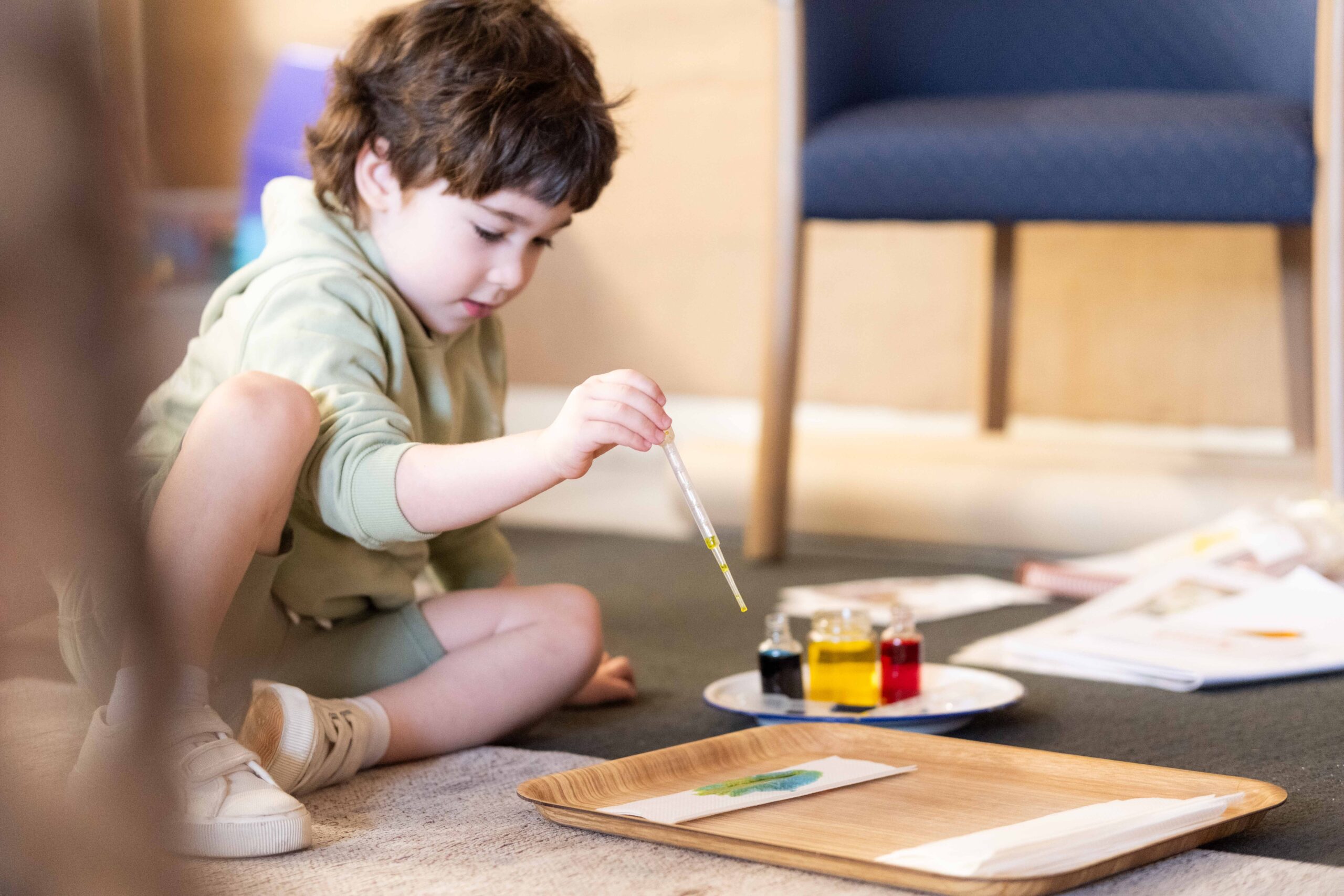
Play-based experiences promote inquiry, questioning and support:
- A sense of safety, happiness, and emotional wellbeing
- Confidence and positive self-image through self-directed learning
- Reduced stress by making learning fun
- Social skills like sharing, cooperation, and negotiation
- Physical development—both fine and gross motor skills
- Cognitive growth including decision-making, language, and problem-solving
- Positive learning dispositions such as curiosity and resilience
- Scientific thinking through investigation and hypothesising
- Exploration of mathematical concepts and skills
The curriculum enables children to learn through story books. They are the basis for exploration of ideas using provocations, inquiry/questioning, and intentional teaching that incorporates numeracy, literacy, nature play and the protective behaviours curriculum. A specific Numeracy and Literacy program (Pre-Lit) is used with intentionality and specific resources, incorporated through discussion, storytelling, music, singing, drawing, painting, and 4-year-old writing and games (experienced during small group times). The children bring knowledge and understanding to each experience by exploring ideas and concepts, before recording their knowledge in individual and creative ways. This knowledge is transferred and re-imagined through-out the day during play.
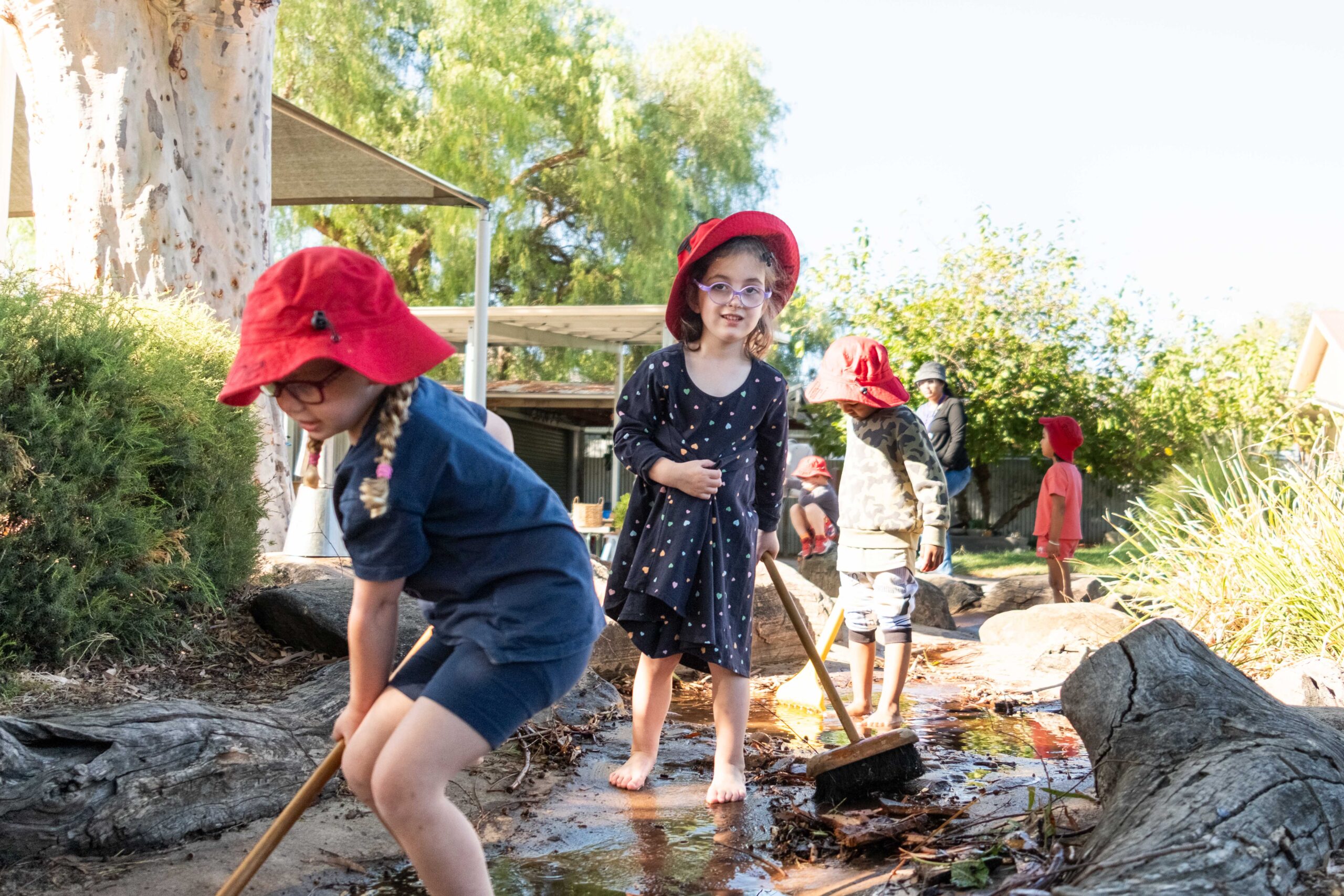
So, why is the environment considered the third teacher?
Fostering Curiosity and Exploration:
Children are natural explorers. By carefully crafting the learning environment, we stimulate their curiosity and encourage them to investigate, question, and discover new ideas. Natural materials provide opportunities for the children and their creations to shine and be the colour.
Promoting Collaboration and Communication:
Learning spaces are designed to promote collaboration, group work, and effective communication. This aligns with the EYLF’s emphasis on building social skills and developing effective communication strategies from an early age.
Reflecting Children’s Voices and Choices:
The environment is a mirror of the children’s interests, preferences, and cultural backgrounds, intentionally designed to be flexible and responsive to children’s voices and choices, ensuring a sense of ownership over their learning spaces.
Encouraging Problem-Solving and Critical Thinking:
Thoughtfully arranged environments present challenges and opportunities for problem-solving, critical thinking, and decision-making.
Through these experiences, children develop essential cognitive skills that lay the foundation for future learning success.
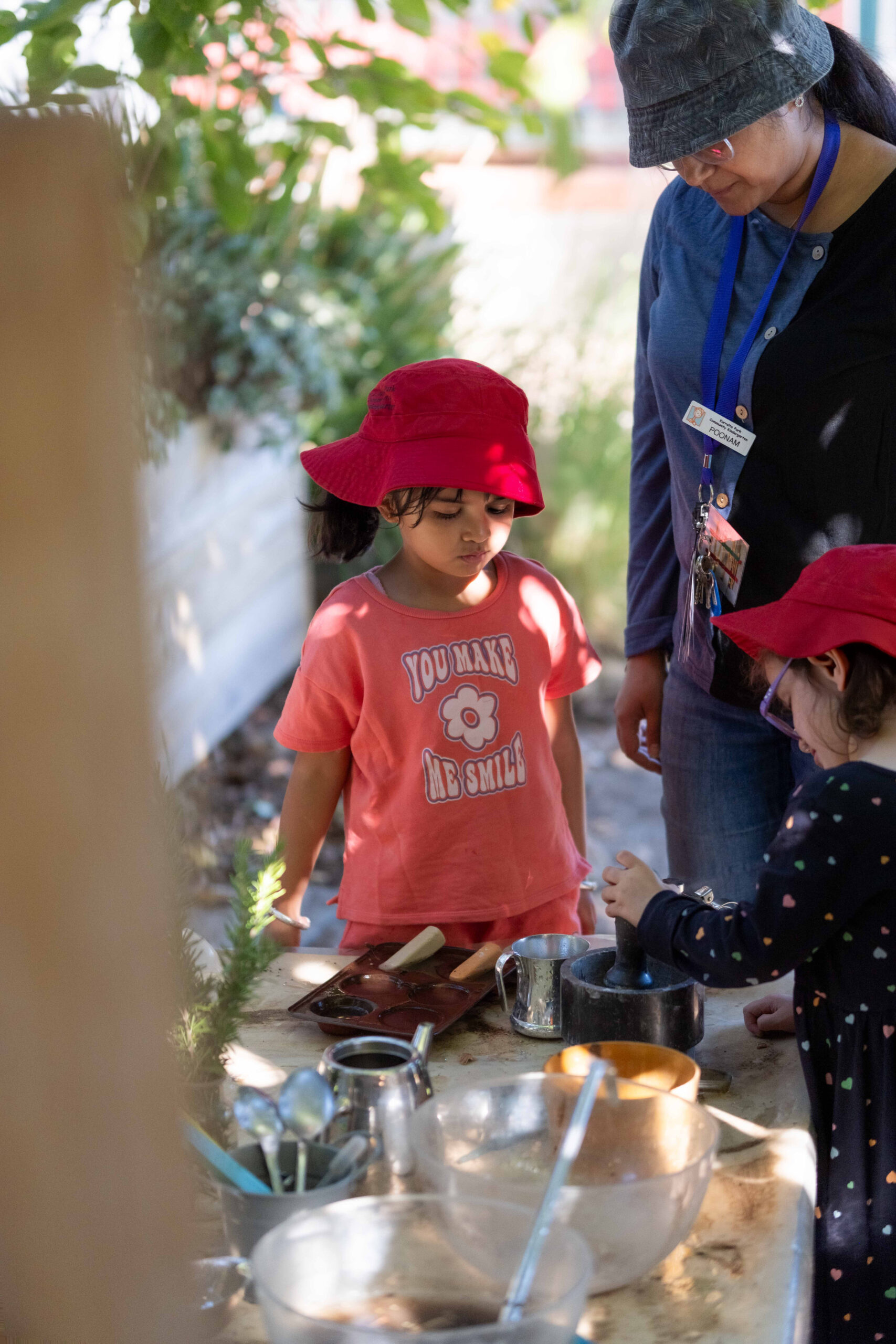
Your involvement is crucial in supporting the ‘environment as the third teacher.’
Here are a few ways you can contribute:
Remain Engaged: Regularly communicate with teachers about your child’s interests and experiences at home. This information can help shape the learning environment to better suit individual needs.
Create a Learning Environment at Home: Ask your child to help you make a small space into a learning experience based on one of their interests, a learning table with natural objects, a drawing table, painting area, cosy corner/tent, large boxes for your children to play in and paint, cut and stick, a mud kitchen outdoors with old pans, spoons, and mud.
Encourage Independence: Foster a sense of independence in your child by allowing them to make choices and decisions within a safe and supportive environment. Enable your child to set up their play space and teach them how to pack up once they have finished playing.
In conclusion, by recognising the environment as the third teacher, we provide our children with a rich and stimulating educational experience. Together, as parents and educators, we can cultivate an environment that nurtures curiosity, creativity, and a love for learning in our young learners.
The indoor environment includes many natural elements that are visually calming, neutral, and warm. These natural objects have beautified the environment to entice the children’s creativity, curiosity and interest, boosting the idea of the environment at the third teacher. As an educational team, we have worked diligently to develop invitations for learning that entice interest, excitement and challenge the children’s knowledge and understanding of each other and our surroundings. Loris Malaguzzi describes the ‘three teachers of children—adults, other children and their physical environment. The environment plays a foundational role in the process of making learning meaningful. An optimal environment empowers children as they investigate and explore open ended opportunities based on aspects of the environment that interest them. Children are viewed as partners and collaborators in their education and the environment relaxes, stimulates, provokes, and facilitates creativity and calm independent thinking.
Dareska Brus
Director, Kurralta Park Community Kindergarten